
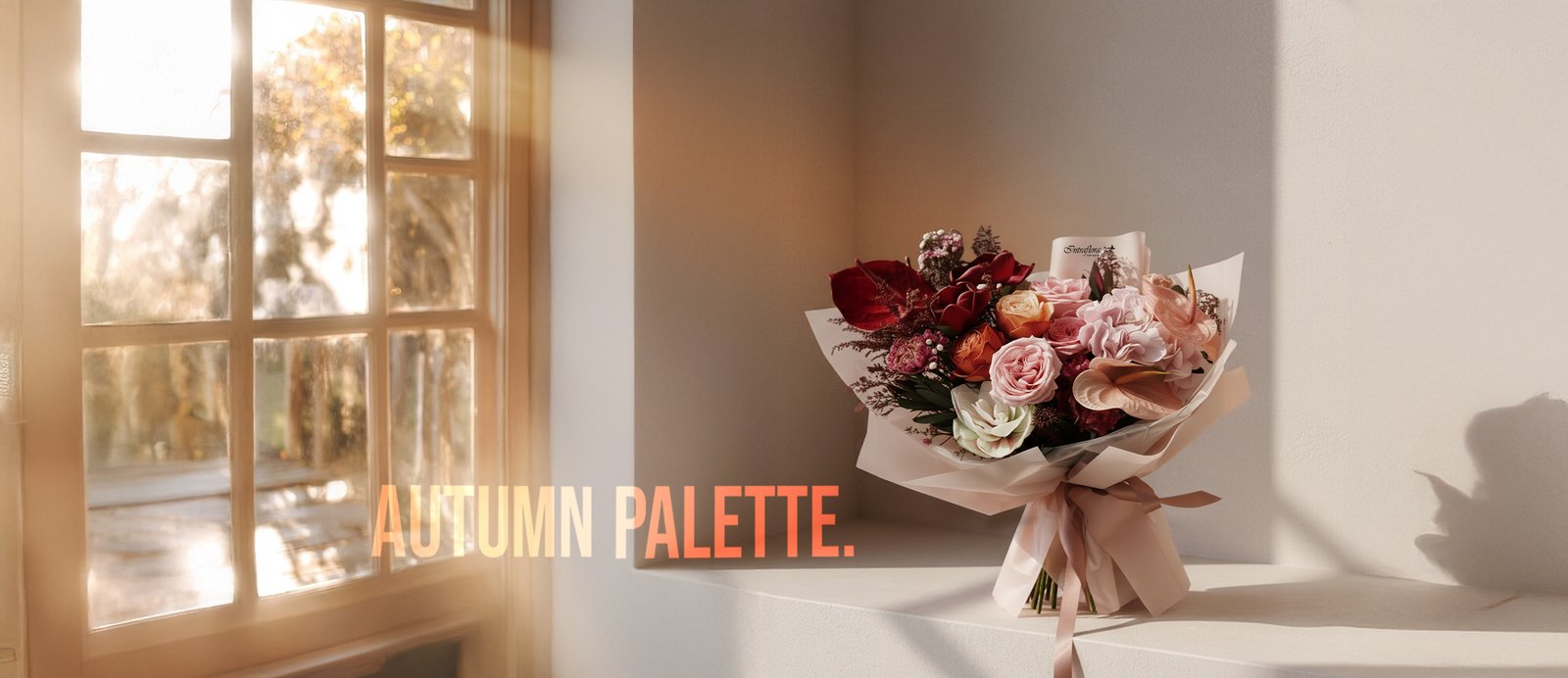
You spent AED 350 on a hand-tied bouquet of garden roses and eucalyptus. It arrived on a Tuesday morning, stunning, fragrant, the kind of arrangement that makes you rearrange the entire kitchen island just to give it a proper stage. By Thursday evening, the roses had drooped at the neck like they’d given up on life entirely, the eucalyptus was crispy at the edges, and the water in the vase had turned a shade of yellow that suggested something was actively decomposing. You did everything the card said. You trimmed the stems. You changed the water. And yet the flowers collapsed faster than your motivation in a July afternoon.
The problem is not the flowers. The problem is not you. The problem is that you live in a city where the outdoor temperature in August hits 48 degrees Celsius and your indoor temperature sits at a permanent 19 degrees, and your cut flowers are trapped in a climate war they did not sign up for.
Most flower care guides you will find online were written by people in Amsterdam or London, where the ambient humidity hovers around 70 percent and the biggest threat to a bouquet is a curious cat. Those guides will tell you to keep your flowers in a cool room. Congratulations — your entire apartment is a cool room, and your flowers are still dying. The rules are different here, and until someone tells you what those rules actually are, you will keep spending money on arrangements that last three days and quietly blaming yourself for not having a green thumb. You do not need a green thumb. You need to understand what air conditioning does to a flower stem, and you need to make about four small adjustments that will genuinely double the lifespan of every bouquet you bring into your home.
The Air Conditioning Problem Nobody Talks About
Here is what is happening to your flowers right now, in the room you are sitting in, while you read this. Your air conditioning unit is pulling moisture out of the air at a rate that would impress an industrial dehumidifier. The relative humidity in a typical Dubai apartment during the summer sits somewhere between 20 and 30 percent. For context, the Sahara Desert averages around 25 percent. Your living room is, botanically speaking, a desert, and you have placed a collection of cut stems — organisms that are roughly 80 percent water and have no root system to replenish what they lose — directly into that desert.
The cold air itself is not the enemy. Flowers actually prefer cool temperatures, which is why florists store them in walk-in coolers at around 4 to 6 degrees Celsius. The enemy is the dryness of that cold air and, more specifically, the velocity at which it moves. When your AC vent is blowing directly across a dining table or a console, it creates a microclimate of accelerated evaporation around the flower heads. The petals lose moisture faster than the stems can draw water up from the vase, and the result is the telltale droop that looks like dehydration because that is exactly what it is. The flower is not wilting from heat. It is wilting from thirst while standing in a glass full of water, because the air around it is stripping moisture from the petals faster than the vascular system can compensate.
The fix is simpler than you think. Move the vase. Not across the room — just out of the direct path of the airflow. If your AC vents are in the ceiling, which they almost certainly are, place your flowers on a surface that is not directly beneath a vent. A corner of the kitchen counter, a side table near a wall, a bathroom shelf. The bathroom, in fact, is one of the best rooms in a Dubai apartment for cut flowers, because the humidity from showers creates a microclimate that more closely resembles the conditions flowers actually evolved in. If you have a guest bathroom with a window ledge and decent light, try placing your next arrangement there and watch how much longer the petals stay firm.
The Water Temperature Myth and What to Do Instead
Somewhere along the way, a piece of advice started circulating that you should put ice cubes in your flower vase to keep the water cold. This advice is not entirely wrong, but it is incomplete in a way that causes more harm than good in a Gulf climate. Ice-cold water shocks the stems of tropical and subtropical flowers — the roses, orchids, and lilies that make up the majority of arrangements delivered in the UAE — and causes the cells in the stem to contract, which actually slows down water uptake. You are essentially giving the flower a cold-induced cramp and then wondering why it cannot drink.
What you want is water that is cool to the touch but not cold. Think of the temperature of the water that comes out of your tap after you have let it run for about ten seconds — roughly 15 to 20 degrees Celsius. This is cool enough to slow bacterial growth in the vase, which is the other major killer of cut flowers in hot climates, but warm enough that the stems can absorb it efficiently. If your tap water comes out warm because the pipes run through an exterior wall that has been baking in the sun all day, fill the vase from a filtered pitcher that has been sitting on the counter, not from the fridge. Room temperature or slightly below is the target.
Change the water every two days. Not every three days, not when it starts to look murky, every two days. In a Dubai summer, bacteria multiply in vase water at roughly twice the rate they would in a European spring, and once the bacterial colony reaches a certain threshold, it forms a slimy film inside the stems that blocks water absorption entirely. At that point, no amount of trimming will save the arrangement. The flowers are sealed off from their only water source, and they will die within hours regardless of what you do. Two days is the window. Set a reminder on your phone if you have to.
The Trimming Technique That Actually Makes a Difference
You have probably been told to trim your flower stems at an angle, and you have probably been doing it with whatever scissors happened to be in the kitchen drawer. The angle matters, but the tool matters more. Kitchen scissors crush the vascular tissue at the base of the stem, collapsing the tiny channels that draw water upward. It is the botanical equivalent of stepping on a garden hose and then wondering why the sprinkler is not working.
Use a sharp knife or a pair of proper floral shears. Cut about two centimeters off the bottom of each stem at a 45-degree angle, and do it underwater if you can — hold the stem in the vase and cut just below the waterline. The reason for this is that the moment you expose a freshly cut stem to air, an air bubble forms at the base and travels up into the vascular system, creating an embolism that blocks water flow. Cutting underwater prevents the bubble from forming. It takes an extra thirty seconds per stem, and it is the single most effective thing you can do to extend the life of a bouquet in a dry climate.
Trim the stems every time you change the water, which means every two days. Each trim reopens the channels and gives the flowers a fresh surface area for absorption. You will lose a few centimeters of stem height over the course of the bouquet’s life, which is why taller arrangements tend to outlast shorter ones — they have more stem to sacrifice.
The Placement Mistakes That Are Quietly Killing Your Bouquet
Beyond the AC vent issue, there are three other spots in a typical Dubai home where flowers go to die, and most people put their arrangements in at least one of them without realizing the damage.
The first is the windowsill. It seems intuitive — flowers need light, the window has light, therefore the windowsill is the ideal location. In a European climate, this logic holds up. In Dubai in July, the windowsill is a solar oven. Even through double-glazed, UV-treated glass, the direct sunlight hitting a vase of cut flowers will raise the water temperature to a point that accelerates bacterial growth and essentially cooks the stems from the inside. The petals will scorch, the colors will fade, and the water will turn cloudy within hours. Keep your flowers in bright, indirect light. A few meters away from the window is perfect. Direct sun is a death sentence.
The second is the kitchen counter next to the fruit bowl. This one surprises people, but ripening fruit — especially bananas, apples, and tomatoes — releases ethylene gas, a plant hormone that triggers aging and petal drop in cut flowers. A bouquet placed next to a bowl of bananas will shed its petals in half the time it would last on its own. The ethylene is invisible and odorless, so you will not notice it happening until the roses start dropping petals onto the counter like confetti at a very sad party. Move the fruit or move the flowers. Either solution works.
The third is the entrance foyer, which in many Dubai villas and apartments is a dramatic double-height space with a marble console table that looks like it was designed specifically to display a large floral arrangement. The problem is that the foyer is also the space where the front door opens directly into 48-degree air every time someone comes home, creating a thermal shock that hits the flowers like a blast furnace. The temperature swing between the air-conditioned interior and the outdoor heat is so extreme that the flowers experience it as a kind of physiological trauma. If your foyer is the only place you want to display flowers, choose hardier varieties — orchids, anthuriums, and preserved arrangements handle the temperature fluctuations far better than delicate garden roses or hydrangeas.
The Flowers That Actually Last in a Gulf Summer
Not all flowers are created equal when it comes to surviving the specific conditions of a Middle Eastern summer, and knowing which varieties hold up will save you money and disappointment. If longevity is your priority, ask your florist for orchids, which can last two to three weeks in a vase with minimal care, or anthuriums, whose waxy, almost plastic-like petals are naturally resistant to moisture loss. Carnations, unfairly maligned as cheap and old-fashioned, are among the longest-lasting cut flowers available and can easily survive two weeks in a Dubai apartment if you follow the water and trimming routine described above.
If you are committed to roses — and most people are, because roses are the language of love and no amount of practical advice will change that — choose varieties with thicker petals and tighter heads. Freedom roses and Explorer roses hold up significantly better in dry air than the delicate, paper-thin garden roses that look breathtaking on arrival and collapse within forty-eight hours. Your florist should be able to guide you toward the varieties that travel well and last long in your specific climate. At Intraflora, we select our stems with the Gulf summer in mind, which is why our arrangements tend to outlast the supermarket bouquets that were shipped in bulk and stored in conditions that prioritize volume over freshness.
The final option, and the one that more of our clients are choosing every year, is preserved flowers. Preserved roses and hydrangeas are real flowers that have been treated with a glycerin-based solution that replaces the water in the petals and locks them in a state of permanent bloom. They require zero water, zero trimming, and zero attention, and they will look exactly the same in August as they did the day you received them. They are not for every occasion — there are moments when the ephemeral beauty of a fresh stem is the entire point — but for a living room centerpiece or an office desk in a city where the summer lasts six months, they are a genuinely brilliant solution. You can explore our preserved collection here.
Your flowers do not have to die in two days. The climate is hostile, the air conditioning is relentless, and the odds are genuinely stacked against you, but the adjustments are small and the results are immediate. Move the vase away from the vent. Use cool water, not ice water. Trim with a sharp knife, not kitchen scissors. Change the water every two days. Keep the flowers away from the fruit bowl and the windowsill. Choose varieties that were grown for endurance, not just beauty. Do these six things and the AED 350 bouquet that used to last until Thursday will still be standing tall the following Monday, and the room will still smell like something alive, and you will stop feeling like you are failing at something that is supposed to be simple. It is not simple. It never was. But it is solvable, and now you know how.